
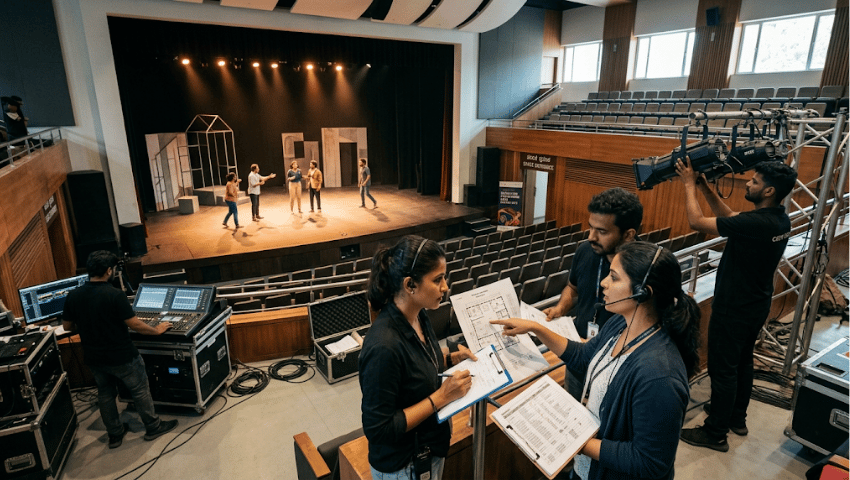
Good theatre in Bangalore lives or dies on the venue behind it. Organisers need a deep, usable stage, acoustics that carry every line to the back row, comfortable seating, proper backstage space and reliable AV. MLR Convention Centre offers this kind of premium indoor setup in JP Nagar and Whitefield, so theatre organisers can stage plays, drama nights and live performances without fighting the room all evening.
The Silence Before a Line Lands
There is a specific kind of silence a good theatre holds. An actor pauses mid-sentence, the room leans in, and for a beat nobody breathes. That silence is fragile. A humming air conditioner, a squeaky seat or a mic that fizzles can shatter it in an instant.
Anyone who has organised a play knows the performance is only half the work. The other half is the room it happens in. Get the venue right and the audience forgets it exists. Get it wrong and the venue becomes the thing everyone remembers, for all the wrong reasons.
This guide is for organisers thinking seriously about theatre in Bangalore. We will walk through the stage, the sound, the seating, the backstage and the practical stuff like cost and location. Along the way, we will flag the mistakes that catch first-timers and the questions worth asking before you sign anything.
Why the Venue Decides Half the Show
A brilliant script and a rehearsed cast still need a room that works with them, not against them. Theatre asks more of a space than most events do.
A wedding forgives a shallow stage. A conference forgives soft acoustics. A play forgives neither. Every whispered line, every dramatic pause and every quick costume change depends on infrastructure the audience never sees.
That is the trap organisers fall into. They picture the performance and forget the plumbing behind it. So the smart approach is to judge any venue for theatre plays in Bangalore on how well it supports a live staged show, not on how elegant the foyer looks.
Stage Depth: The Detail Amateurs Miss
Every stage looks fine when it is empty. The real test comes when a full scene is running on it.
Width gets all the early attention. Depth is what actually decides whether a production breathes. A three-actor drama needs room for movement. An ensemble piece needs space for entrances, exits and a bit of set. Cramp that, and the whole thing feels boxed in.
Usable Area, Not Paper Dimensions
Ask for the usable stage area, not the total measurement on a brochure. Side curtains, wings and speaker stacks eat into the space more than most people expect. A stage that reads generous on paper can shrink fast once it is dressed.
Sightlines From Every Seat
Check that people at the edges and the back can actually see the full stage. A pillar in the wrong place or a low riser can leave whole sections of the audience watching half a scene.
Acoustics: The Part You Cannot Fake
Ask anyone about a play afterwards and the first thing they mention is whether they could hear it. A gorgeous set means nothing if the dialogue turns to mush by row ten.
Acoustics separate a proper performing space from a hall that happens to have a stage at one end. You want sound that carries cleanly, without echo bouncing off bare walls and without dead spots where lines simply vanish.
Worth testing before you commit:
- Even sound across every seat, front to back
- No harsh echo or reverb off hard surfaces
- A sound system that handles both quiet dialogue and full music
- Enough microphones, including cordless ones for moving actors
- A technician on hand during rehearsal and the live show
Push for a full sound check on the actual stage. An hour spent listening from different seats tells you more than any spec sheet ever will.
Seating and Audience Comfort
A play runs ninety minutes or more, often without a proper break. A stuffy hall or a cramped seat wears the audience down long before the interval.
Comfortable seating with decent legroom keeps people present in the story rather than shifting around. Air conditioning that copes with a full house matters just as much, especially through a long summer show.
Think about the flow too. A clear foyer where people gather at the interval, easy entry and exit, and signage that stops guests wandering all add up. For anyone hosting drama and comedy plays in Bangalore, this quiet comfort is a big part of why audiences come back.
Backstage: Where the Show Is Actually Won
The audience never sees backstage, which is precisely why organisers forget to check it. Yet this is where a smooth show is made or unmade.
Green Rooms and Prep Space
Where do actors change, warm up and wait for cues? A cast of fifteen crammed into one small room turns tense before the curtain even rises. Proper green rooms keep nerves and costumes in order.
Access to the Stage
Performers need to reach the wings without walking through the audience. Check how the backstage connects to the stage entrances, and whether both sides are reachable for scenes that need entries from left and right.
Storage for Sets and Props
A play often arrives with set pieces, props and instruments. Somewhere to store and stage these out of sight keeps transitions clean and the wings uncluttered.
AV and Lighting: Setting the Mood
Lighting does half the emotional work in theatre. A single spotlight can carry a monologue. A slow fade can close a scene better than any line.
You want adjustable stage lighting that shifts with the mood, a lighting operator who knows the cues, and a projector or screen if the production uses visuals. For a live music segment or a comedy set folded into an evening, the same reliable AV keeps everything smooth.
Confirm that technical support stays through both rehearsal and performance. Kit that works in the afternoon has a habit of misbehaving the moment a paying audience arrives.
Location and Parking: Attendance Starts Outside
A venue that is a slog to reach loses you audience before the lights dim. Location shapes turnout and mood, so it belongs early in your thinking.
For a public show drawing people from across the city, a well-connected spot on a good road saves everyone a stressful commute. Bangalore traffic rarely cooperates, and a venue people can actually reach fills more seats.
Parking is the detail that quietly sets the tone. When a crowd arrives inside the same half hour, a jam at the gate frays nerves before anyone sits down. Ask about parking capacity up front.
Having options in different parts of the city helps as well. A JP Nagar venue suits audiences in the south, while a Whitefield space is kinder to the east. Matching the location to your likely crowd trims travel time for everyone and lifts attendance.
Cost Guidance: What Actually Shapes the Price
Money talk makes the plan feel real, so let us be straight about what drives the number you finish with.
Several things move it. Hall size, the day of the week, the season and the technical extras all play a part. A weekday slot usually costs less than a prime weekend evening, and a half-day booking less than a full one.
A simple way to hold the budget in your head:
- Hall rental forms the base and scales with capacity and hours.
- Technical support for sound and lighting may sit inside the package or be billed on its own.
- Extras like additional staging, décor and rehearsal time can move the total more than expected.
Ask each shortlisted venue for a single bundled figure. A quote that folds the hall, basic AV and support staff into one number is far easier to plan around than a pile of separate line items.
For a one-off staged show, ask about half-day and full-day rates plus rehearsal access. Matching the slot to your real runtime often saves a meaningful amount.
Already sketching out numbers? A short call with a venue team that runs events every week clears up more than an afternoon of scrolling. Share your date, expected audience and technical needs, and ask for a slot-wise estimate.
Mistakes That Trip Up Theatre Organisers
A handful of slip-ups show up again and again. A little foresight saves you plenty of stress.
- Judging on photos alone. A handsome hall with weak acoustics or a shallow stage disappoints fast.
- Skipping the sound check. Never assume the audio will simply behave on the night.
- Ignoring backstage. No green room turns the wings into gridlock.
- Forgetting sightlines. A pillar or flat floor can leave half the audience watching a wall.
- Overlooking parking. A gate jam sets a poor tone before the curtain lifts.
- Booking too late. The good dates in performance season vanish months ahead.
Dodge these six and half your worries fade before they arrive.
Questions Worth Asking on Every Venue Visit
Carry this short list to each walkthrough. The answers tell you a lot in a hurry.
- What is the usable stage depth, not just the width?
- Are the acoustics even across every seat, and can we test them?
- Is technical support included, and is it there during rehearsal?
- How many microphones and what lighting kit come with the hall?
- Is there a proper green room and backstage access?
- What is the seating capacity and are sightlines clear throughout?
- What parking capacity do you offer for the audience?
A venue that answers these calmly is usually one that runs a smooth show.
What the Numbers Say About Live Theatre Right Now
The wider trend backs up what organisers already feel. People are hungry for live, in-person experiences again, and theatre is riding that wave.
India’s live events and experience economy has grown into a serious sector, valued at close to INR 1 lakh crore. Theatre, comedy and cultural performances all share in that rising appetite for something a screen cannot deliver.
A couple of shifts stand out. Industry observations suggest a strong majority of audiences now prefer attending events in person over watching online, which explains why a well-run physical stage carries real weight. Alongside that, organisers increasingly favour purpose-built performance spaces over generic halls, simply because a proper stage performs better for anything acted out live.
A few takeaways stand out for anyone staging theatre plays in Bangalore right now:
- Specialist spaces win. A proper performance setup beats a makeshift hall every time.
- Experience leads. Audiences want an evening they remember, not a box quietly ticked.
- Live holds firm. In-person theatre offers what streaming never can.
- Convenience decides. Easy access and reliable parking shape choices early.
Read together, these all point one way, toward venues that pair a genuine stage with real comfort and easy access for a full house.
Why MLR Convention Centre Suits Theatre So Well
If your search is for a venue for theatre in Bangalore that keeps a live show calm and polished, MLR Convention Centre is worth a proper look. With premium event spaces in JP Nagar and Whitefield, it hands you two strong locations to match your audience rather than dragging everyone across the city.
That choice alone solves a familiar headache. Audiences in the south head to JP Nagar, those in the east to Whitefield, and travel time drops for everybody.
Built for the Way Live Performance Works
The core strength here is the auditorium-style setup. MLR Convention Centre is designed for large indoor events, which is exactly what a staged play, a comedy night or a cultural performance asks for.
Spacious indoor halls seat a full audience in comfort, with room to breathe instead of rows jammed to the edge. The structured layout suits performances, prize nights and speeches with equal ease, so an evening moves in a natural rhythm.
For plays in Bangalore, live music, stand-up comedy and cultural evenings, this kind of purpose-built indoor space is a real advantage. It carries English theatre plays in Bangalore, regional drama and full productions with the same steady composure.
Support That Lifts the Load Off Organisers
Running a live show is a lot to hold in one head. A professional venue team behind you changes the whole experience.
MLR Convention Centre helps organisers with structured event flow, stage and seating coordination, and guest-friendly infrastructure that makes a big evening feel manageable. Rather than firefighting all night, you actually get to watch the show you built.
It is this mix, premium indoor spaces, two convenient Bangalore locations and steady professional support, that makes MLR a dependable choice for theatre and cultural events alike.
You can explore the venue through the MLR Convention Centre homepage, review options for large gatherings on the wedding banquet halls page, and look at business event spaces via the conference and meeting halls page.
A Calm, Step by Step Way to Plan
The planning gets much lighter when you tackle it in order. Here is a sequence that keeps organising teams steady.
- Confirm your audience size first. Nearly every other decision flows from this number, so pin it down early.
- Name the production type. A two-hander drama, an ensemble play and a comedy night each need different stage and seating setups.
- Shortlist on fit, not looks. Match your stage needs, audience and budget to two or three venues before falling for one.
- Compare bundled packages. Ask each shortlisted venue for one figure covering hall, AV and support staff.
- Visit and test the stage. A walkthrough reveals sound, sightlines and stage depth in ways a website never can.
- Run a technical rehearsal. Never lock in a show you have not tried on the actual stage.
- Confirm parking and backstage. Pin down the details that quietly decide how the night feels.
- Book early. Once a venue feels right, secure the date before someone else does.
Work through these and the coordination that usually steals your sleep becomes genuinely manageable. Speak to the venue team early, compare on audience size and production style, and pick a space that makes the whole thing easier rather than harder.
Bringing It All Together
A play, a comedy night or a cultural performance should feel effortless to the audience, even when a great deal is happening out of sight. Get the stage, the acoustics, the seating and the backstage pulling together, and the evening runs the way you imagined it.
The performances deserve the spotlight, of course. But as you compare options for theatre in Bangalore, weigh how the whole night will feel for real people, from the actors in the wings to the family in the back row. A venue that nails the practical details is what frees everyone to lose themselves in the show.
For performances across the south and east of the city, MLR Convention Centre brings spacious indoor halls, two handy locations in JP Nagar and Whitefield, and a team used to running live events. Line up your audience size, your budget and your priorities, then see how they stack against what the venue offers.
Speak to the MLR Convention Centre team to check dates, ask for a package or arrange a walkthrough. A short conversation often makes the right choice feel obvious. Start on the MLR Convention Centre homepage or reach out through the contact and enquiry page to plan your show with better clarity.
Frequently Asked Questions
What should organisers check first in a theatre venue in Bangalore?
Start with stage depth, acoustics and backstage space, since these decide whether a live show works. Then look at seating comfort, sightlines, AV support and parking. A venue that handles all of these keeps the focus on the performance rather than the room.
Which venues suit theatre plays in Bangalore?
Look for a purpose-built indoor space with a deep, usable stage, even acoustics and proper green rooms. MLR Convention Centre offers spacious indoor halls in JP Nagar and Whitefield, suited to plays, comedy nights and cultural performances.
Can MLR Convention Centre host plays, live music and comedy shows?
Yes. The auditorium-style setup suits theatre plays in Bangalore, English theatre plays, drama and comedy plays, live music and cultural programs, along with college fests and corporate events. The structured indoor layout works well for many kinds of staged performance.
How much does it cost to book a theatre venue in Bangalore?
Cost depends on hall size, the day and time, the season and any technical extras. Weekday and half-day slots usually cost less than weekend evenings. For a clear number, share your date, expected audience and AV needs with the venue team and ask for a bundled estimate.
Is on-site sound and lighting support usually included?
A proper performance venue should include reliable sound, adjustable stage lighting and technical support during both rehearsal and the show. Confirm your exact AV needs, microphone count and rehearsal access with the venue team when you enquire.
How early should I book a venue for a stage performance?
Book several weeks to a few months ahead, especially for popular dates in performance season. Early booking secures your preferred hall and gives the team time to plan the stage, seating and technical setup.
Does the venue matter for smaller drama or workshop showcases?
Yes. Even a small showcase from an acting class or theatre workshop benefits from clean acoustics and a proper stage. A compact, well-run space feels far better than a large hall that swallows the sound and the atmosphere.