
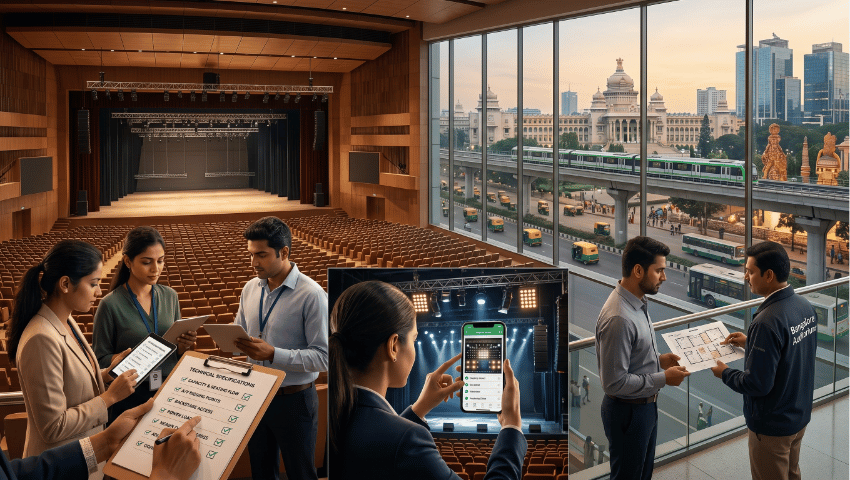
Ask any organiser how they slept the week before a big show, and you will get a tired laugh. The seating chart has a mind of its own. The lighting crew keeps circling back about rigging points. And the sponsor, with impeccable timing, has just decided their banner near the stage really ought to be double the size. Under all that noise, one quiet worry keeps surfacing. Will the venue actually hold this together?
That single question shapes how the whole thing turns out, be it a performance, a conference, or a cultural evening. And here is the thing about booking a grand auditorium in Bangalore. The glossy brochure photos barely matter. What really counts are the small, unglamorous details that decide how the day actually moves. So this guide walks through the stuff experienced organisers check long before they sign anything, the kind of homework that spares you a mountain of stress and a pile of nasty surprises later.
Here is what we will cover:
- Picking an auditorium that actually fits your event and the size of your crowd
- The seating, sound, and stage details that quietly decide whether a show works
- A no nonsense checklist, the questions worth asking, and the slip ups to steer clear of
The Venue Decides More Than You Think
Think of an auditorium as far more than four walls and rows of chairs. The moment your audience walks in, the room is already doing work. It sets the mood, it decides how cleanly your message reaches the back row, and it has a funny way of choosing what people chat about in the car on the way home. The evening itself, or the hassle of it.
Choose well and the night more or less takes care of itself. The sound carries, people settle into their seats without fuss, and your team gets to breathe and enjoy the evening rather than dashing about plugging holes.
Choose badly, though, and the whole night becomes a string of small fires to put out. Muffled sound, seats with a blocked view, a snarl of cars at the gate. Any one of them can wipe out months of work in a single evening. Not fun, but it happens.
The Headaches Every Organiser Knows Too Well
Before we get to the good part, let us name the headaches. Most will feel familiar to anyone who has ever produced an event in this city.
- Picking the venue itself, when every listing seems to promise the exact same thing
- Keeping guests happy through arrival, seating, and the breaks in between
- Working out the budget, which quietly drives every other call you make
- Sorting the tech, meaning sound, light, and projection that actually behaves
- Parking and access, the bit nobody worries about until the day arrives
- Wrangling vendors, from the caterers to the AV crew
Spot a venue that quietly takes care of all this before you even ask, and chances are you have struck gold. Across the auditoriums and convention halls in Bangalore, that one trait often draws the line between an evening that hums along and one that comes apart at the seams.
Matching the Auditorium to Your Event
Different events ask very different things of a space. A classical concert lives and dies by its acoustics. A corporate conference needs dependable AV and clean sightlines. A theatre play wants proper wings and real stage depth.
So define your event first, before anything else. The format quietly decides everything that follows, from seating to stage to the tech rider.
Capacity considerations
Start with the numbers. A grand hall swallows a crowd of 150 and feels half empty, while 800 people packed into a tight room start eyeing the exits. Get the size wrong in either direction and your guests feel it.
As a rough guide:
- Up to 300 seats suits recitals, panels, and intimate cultural events
- 300 to 700 seats works for mid sized conferences and theatre plays in Bangalore
- 700 plus seats fits large live music events, award nights, and conventions
A practical tip earned the hard way. Plan for a slightly fuller house than your confirmed list. Walk ins, plus ones, and last minute guests have a sneaky habit of pushing the count up.
Seating formats
Seating quietly shapes how people engage. The very same room can feel formal or relaxed depending entirely on how you arrange it.
- Theatre style when the focus is a performance or a keynote on stage
- Classroom or boardroom for training sessions and corporate event spaces in Bangalore
- Banquet rounds when it is a wedding, a reception, or a gala dinner
One quick question saves a lot of guesswork here. Ask the venue which layouts the space actually handles well, because not every auditorium shifts from one format to another without a fight.
Technical Readiness: The Part Audiences Notice Most
Nothing deflates an evening faster than a microphone that dies mid speech. Technical readiness is exactly where a grand auditorium in Bangalore earns its reputation, or quietly loses it.
Walk the space with a technical eye, or bring along someone who has one. Check:
- Sound system quality and even coverage across every single row
- Lighting rigs with enough flexibility for stage and ambient effects
- Projection and screens visible from the back and the side seats alike
- Power backup so a sudden outage never stalls the show
- Rigging points for production heavy live performances
Acoustics deserve real scrutiny if you are running a live music venue in Bangalore. Bad sound flattens a brilliant band into a wash of mush, while a properly tuned room carries every note clean and crisp to the people in the very last row.
Stage Requirements and Production Flow
Performers and production teams care deeply about what sits behind the curtain. The visible stage, honestly, is only half the story.
Before booking a theatre or auditorium in Bangalore, confirm:
- Stage size and depth for sets, choreography, or large panels
- Wings and backstage space for quick changes and crew movement
- Green rooms placed close to the stage for performers and speakers
- Load in access for equipment, instruments, and props
A venue that gets these right makes life easier for everyone and helps avoid those last minute scrambles on show day.
Getting In: Parking, Access, and First Impressions
Here is a truth most organisers learn the hard way. The night does not begin at the stage. It begins the moment a guest pulls into the car park. Make that first stretch a struggle, and people walk in already a little annoyed, well before the curtain ever lifts.
Look for:
- Ample parking that matches your expected headcount
- Step free access for elderly guests and anyone with mobility needs
- Clear signage running from the entrance to seating and washrooms
- A central location guests can reach without a cross city expedition
Location pulls more weight here than people expect. A well placed auditorium in JP Nagar or an event venue in Whitefield adds convenience for organisers and attendees alike, since easy reach often decides who actually shows up on time.
Catering and Event Flow
Plenty of auditorium events fold in a reception, a lunch break, or a networking session. How smoothly that runs depends almost entirely on the spaces wrapped around the main hall.
Check that the venue offers:
- Catering on site or through trusted partners, with a menu you can actually shape to suit the day
- Room to gather before the main event, for registration, a bit of mingling, or a quick coffee
- Service that moves, so the queue never swallows half the break
- An easy path that links the lobby, the hall, and the dining areas without a maze in between
Get those spaces talking to each other, and the whole night finds its groove. People relax, the breaks feel easy, and nobody is left standing around wondering where to go next.
Where MLR Convention Centre Fits In
Now imagine all of that living under one roof, every piece within easy reach. That is when an event really starts to breathe.
That is roughly the idea behind MLR Convention Centre in Bangalore. You get a properly equipped auditorium, convention halls with room to spare, and corporate ready facilities that suit conferences, cultural events, and live performances. Throw in wedding and reception setups, a team that knows how to run an event, and a spot that is genuinely easy to reach, and the place can shoulder pretty much the whole occasion.
And that is the real beauty of it. When everything lives in one place, the coordination gets simpler and your guests stay engaged instead of wandering off. Production teams, institutions, corporate organisers, anyone really, gets the comfort of knowing the infrastructure, the seating, and the tech all sit together, ready to go. Which means the evening runs clean from the first guest at the door to that final burst of applause.
Narrowing Down Your Shortlist
By the time you have three or four names on a list, they all start to sound the same on paper. The fix is dull but reliable. Put them side by side and compare them point by point.
Score each venue on:
- Seating capacity against your realistic headcount
- Technical infrastructure for sound, light, and projection
- Stage and backstage suitability for your format
- Accessibility and parking for your guests
- Catering and pre function spaces for breaks
- Total cost against what is genuinely included
Jot down a quick score for each, and one name almost always pulls ahead before you have even finished the list.
The questions worth asking first
Honestly, a few pointed questions will tell you more than any glossy brochure. So when you sit down with the venue team, ask them:
- What is the real seating capacity in each layout, not just the headline number?
- Is the AV handled in house, and can we book a proper tech rehearsal beforehand?
- How many cars can the parking actually take on a busy night?
- What does the package cover, and what quietly lands as an extra later?
- Will someone from your team be on the floor coordinating on the day itself?
The clarity of their answers tells you a great deal about how the day itself is going to run.
Budget Planning and Timelines
Money tends to lead the conversation, and that makes sense. The trick is spending wisely while still giving your guests a night they actually remember.
Ballpark figures help here. Most premium auditorium and convention venues in Bangalore land somewhere between 1,50,000 and 5,00,000 per day, and that number swings a fair bit depending on how many seats you need, how heavy the tech demands are, and which day of the week you pick. Book a weekday or an off season date, and the price tends to soften nicely.
On timelines, book early:
- Three to six months ahead for large conferences and cultural events
- Six to twelve months for peak season weekends and festive dates
Lock in your date sooner rather than later and you get the pick of the calendar, plus a price that tends to stay friendlier than the one you scramble for at the eleventh hour.
The Slip Ups Worth Steering Clear Of
A few common slip ups trip up even the most careful organisers:
- Skipping the site visit and trusting the photos alone
- Underestimating parking for a large audience
- Ignoring a tech rehearsal before the main event
- Overlooking backstage needs for performers
- Booking late, which limits dates and quietly inflates cost
None of these are hard to dodge, really. You just have to know they are coming.
Bringing It All Together for a Show People Talk About
Strip away all the noise, and picking a grand auditorium in Bangalore boils down to one thing. Find a venue that takes the logistics off your hands, so your team can pour its energy into the show and the audience instead of fretting over the moving parts ticking away backstage.
Once the seats, the sound, the stage, the parking, and the catering all live in one place run by people who know their job, the evening just settles into a rhythm of its own. And that, really, is what separates a show people merely turn up for from one they keep mentioning weeks after the lights have gone down.
A good venue takes a lot of the weight off, and a tricky event suddenly feels manageable. So if you have got a performance, a conference, or a cultural night coming up, swing by a place like MLR Convention Centre and have a look for yourself. Drop them a line, book a walk through, or just chat through what you have got in mind, your event, your crowd, and the kind of evening you want people to remember.
Frequently Asked Questions
What should organisers check before booking a grand auditorium in Bangalore?
Look closely at seating capacity, the technical setup, how well the stage and backstage suit your show, parking and easy access, what catering is on offer, and whether the pricing is laid out clearly. Honestly, nothing beats walking the space yourself, since a quick site visit shows you the room and the people running it in a way no brochure ever manages.
How much does an auditorium or convention venue in Bangalore cost?
Most premium venues land somewhere between 1,50,000 and 5,00,000 per day, though that figure moves around quite a bit depending on how many seats you need, what the tech demands look like, and which day you pick. Go for a weekday or an off season date, and the price usually softens a fair bit.
What seating capacity do I need for my event?
Begin with an honest headcount, then nudge it up a little to cover the walk ins who always seem to appear. As a loose rule, up to 300 seats fits recitals and panels nicely, 300 to 700 handles mid sized conferences and theatre plays, and anything past 700 is built for big live music nights and conventions.
Why does technical readiness matter so much for live performances?
It comes down to sound, lighting, and projection, since those three quietly decide what your audience actually walks away feeling. Get a live music venue in Bangalore with rich acoustics and AV you can count on, and the show glides along. Skimp on the setup, though, and one shaky evening can undo months of careful work.
How early should I book an auditorium in Bangalore?
For big conferences and cultural events, give yourself three to six months. For peak season weekends and festive dates, push that out to six to twelve months. The earlier you lock it in, the more dates you get to pick from, and the kinder the pricing tends to be.
Can one venue handle different types of events?
Absolutely. A space built for many uses, with a proper auditorium, convention halls, and corporate ready facilities, can take on conferences, theatre plays, live shows, weddings, and cultural programs alike. And because it all sits in one place, the whole thing stays a lot easier to coordinate.